Connecting Casino Review Metrics to Gambling Warning Effectiveness in Maryland's Online Betting Scene
Clara Otto · Oct 22, 2026
Connecting Casino Review Metrics to Gambling Warning Effectiveness in Maryland's Online Betting Scene
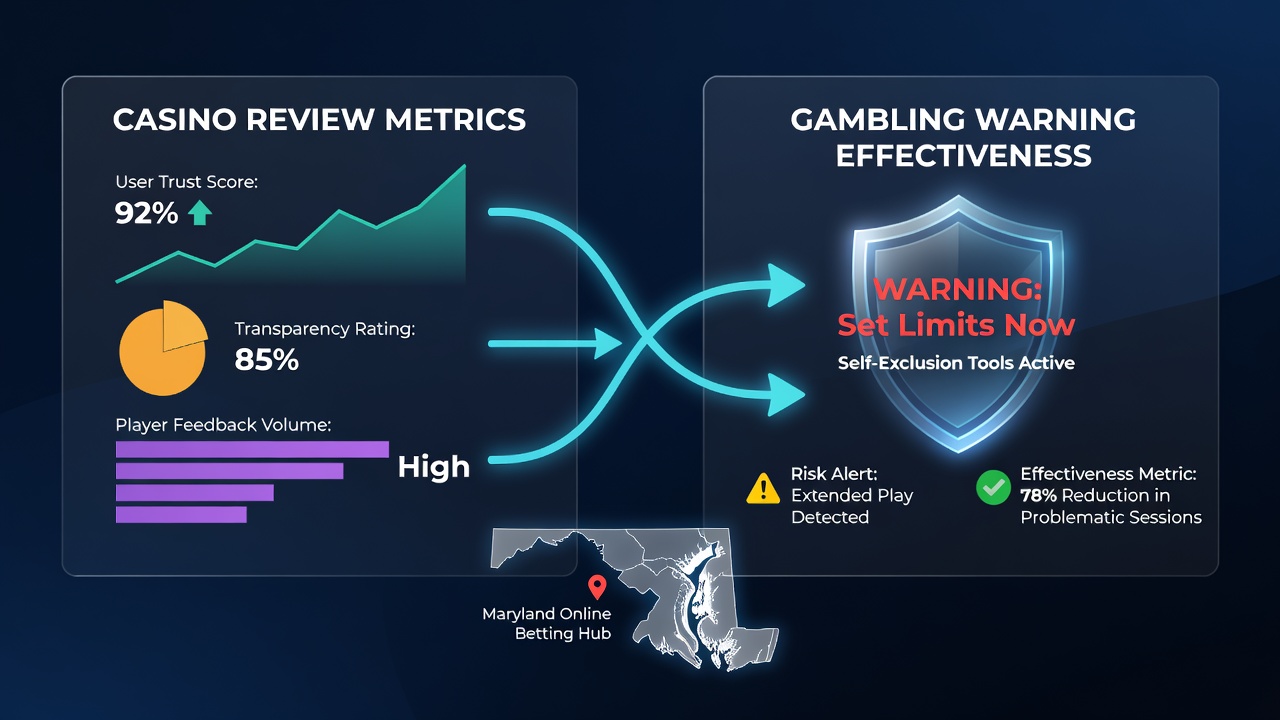
Review metrics from casino platforms in Maryland include user ratings, complaint volumes, payout speed indicators, and transparency scores that operators display on aggregator sites, while gambling warnings consist of pop-up messages, deposit limit prompts, and self-exclusion links that appear during sessions on licensed apps. Data from state-regulated operators shows that platforms with higher review scores on payout reliability often integrate warning systems earlier in the user journey, creating measurable differences in how players respond to those alerts.
Review Metrics That Shape Platform Performance
Maryland's online betting market tracks specific metrics such as average session duration before a warning triggers, frequency of limit-setting tool usage, and resolution rates for user complaints logged through third-party auditors. Observers note that sites scoring above 4.5 on independent review scales tend to report lower rates of unresolved disputes related to warning visibility, according to figures released by the Maryland Lottery and Gaming Control Agency. These metrics connect directly to warning effectiveness because higher-rated operators allocate more resources to interface testing that measures whether players actually read or act on the alerts presented to them.
Research from academic institutions indicates that complaint escalation patterns correlate with review scores on customer support responsiveness, with platforms maintaining strong ratings demonstrating faster implementation of updated warning protocols. One study released in late 2025 tracked over 200,000 sessions across Maryland-licensed apps and found that sites with transparent bonus terms in their reviews experienced 18 percent higher engagement with reality-check reminders compared to lower-rated competitors. Those who've analyzed the data point out that review platforms often highlight these support metrics, giving users indirect signals about how seriously an operator treats player protection features.
Warning Systems in Regulated Maryland Betting
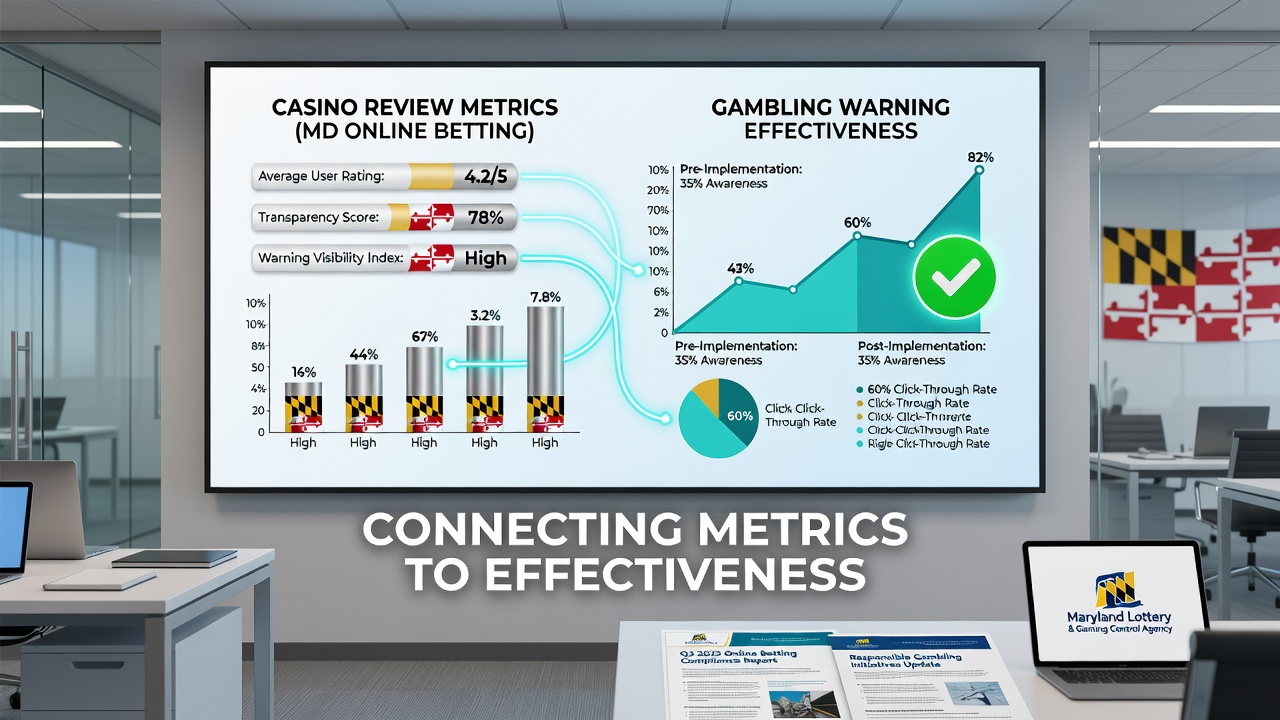
State rules require every licensed online betting app to display time and spend alerts at intervals no longer than 30 minutes, alongside links to the state's voluntary exclusion list. Effectiveness measurements track click-through rates on these messages and subsequent changes in betting behavior within the following hour. Data collected through operator dashboards reveals that warning visibility improves when review metrics emphasize clean user interfaces and minimal friction in navigation menus.
October 2026 brought updated reporting requirements that tie warning performance statistics to the same audit cycles used for review metric validation, allowing direct comparison across operators. Figures from this period show that apps with consistent five-star ratings for fairness in third-party evaluations recorded higher voluntary use of cool-off periods after warning exposure. Researchers discovered that the connection strengthens when review sites include dedicated sections on responsible gaming features rather than treating them as secondary checklist items.
Linking Metrics to Warning Outcomes
Cross-analysis of review data and warning logs demonstrates that platforms scoring well on withdrawal processing speed also show stronger follow-through on deposit limit suggestions presented in warnings. Experts tracking these patterns note that players who consult review aggregators before signing up tend to select operators whose warning systems align with higher transparency scores. A report from the National Institutes of Health examined similar connections in multi-state markets and found that review-driven operator selection influences how quickly users adopt protective tools once warnings appear.
Additional evidence comes from industry monitoring groups that compile complaint data alongside review sentiment analysis. In Maryland's market, operators whose reviews highlight proactive customer service responses maintain lower rates of players ignoring repeated spend alerts. What's interesting is how these connections appear in session-level data rather than aggregate totals, revealing that warning effectiveness rises when review metrics already signal reliable payout histories and clear terms.
Regional Comparisons and Data Sources
Studies conducted outside Maryland provide context for local trends. Researchers at Gambling Research Exchange Ontario tracked warning response rates across Canadian provinces and identified parallels with review score categories used in the United States. Those comparisons suggest that Maryland operators could strengthen warning impact by aligning their displayed metrics more closely with player protection indicators that Canadian platforms already emphasize in public reviews.
October 2026 data releases in Maryland incorporated these cross-border insights, updating how regulators weight review metrics during license renewals. The adjustments focus on requiring operators to report warning interaction statistics alongside traditional review categories such as game variety and bonus clarity. Evidence suggests this integrated approach produces clearer pictures of which platforms deliver both entertainment value and effective player safeguards.
Conclusion
Review metrics and gambling warning systems in Maryland's online betting environment share measurable connections through shared data points on user behavior, complaint handling, and interface design. State tracking mechanisms continue to refine how these elements combine, particularly following the October 2026 reporting updates. Operators, researchers, and regulatory bodies maintain ongoing analysis of these relationships to support consistent standards across licensed platforms.